I regularly get asked this question. Many people comment on it being a fad or far too difficult. So here goes, perhaps this will clarify a few things.
Mindfulness, the origins
Mindfulness has its roots in ancient practices from all over the world. Thich Nhat Hanh was central to Buddhist practices being introduced to the Western world. Buddhist practices describe two types of meditation, firstly meditation which calms the mind and secondly, the type of meditation that allows a deeper insight and understanding. Jon Kabat-Zinn was the pioneer who enabled mindfulness to be viewed as a practice for all, without the attachment of religion. Extensive research by the Centre for Mindfulness Research and Practice has demonstrated the health benefits. Including changes to mental and physical health.
What actually is Mindfulness?
Its stepping off the runaway ‘autopilot’ train for a while. We can get caught up in living a life where we are not actually present. This results in missing out on the good things, not listening to what our bodies need, and losing sight of what we need and our potential. Its so very easy to live in past events, analysing and trying to untangle things in our minds and also trying to control or anticipate the future can also take up hours and hours of our day. Being able to attend to the moment to moment experience and pay attention to current emotions can have an extraordinarily positive impact on our health and wellbeing. Mindfulness is giving attention to the experiences happening now, internal bodily sensations and external every day experiences. Rather than always being caught up in a web or thoughts or rushing from one activity to the next, we start to experience pauses and gaps to allow for insight.
What will mindfulness do for me?
When we live in the moment we see things much more clearly. There is a deeper understanding and insight into our lives. This could impact on us by giving more confidence to follow our hearts desires, or perhaps it could reduce the internal suffering we experience when we get caught up in thinking. Challenges will still come and go in your life but you will find yourself responding in different way, a way that is kinder for you and others. Which often results in a challenge being resolved a lot easier. Having more insight and understanding is something that will benefit every area of your life. When we experience more clarity we tend to make decisions that are healthy and wise and we tend to lead a calmer and more balanced life.
What do I need to do?
To start with just a gentle practice of mindfulness of breathing will work wonders. There are several key considerations to starting this practice. Firstly, the mind will wander when you sit and bring your attention to your breath. Its OK to just acknowledge the thought and come back to focusing on your breath. The more we become preoccupied with the thought or irritated by becoming distracted the further we get from the present moment. Its absolutely OK for your mind to wander, just notice and come back. Secondly, we need to be engaging in this practice for at least 10 minutes every day to reap the rewards.
You can start to be present for all of the activities of your day. Taking a really curious interest in everything from drinking your cup of tea to noticing everything around you when you leave the house will enhance your ability to live here and now. It also makes all activities much more enjoyable, you experience them to a greater extent, with all of your senses. Consider attending a mindfulness group or meditation meeting. This will support you to develop your practice and get support with queries and initiating your practice of other meditations. Meditating in a group can be a very enriching experience.
Source: Dr Elizabeth Sparkes, Mindfulness teacher, Health Psychologist, Lecturer, Mother
As much as our lives may be impacted by our circumstance, I’m a firm believer that they are far more influenced by our attitude. While we may collectively look down upon certain things, you can almost always find an opposing, positive stance to pretty well everything.
Take a rainstorm, for example. Most would find it annoying, gloomy, and/or unfortunate, but others (such as a farmer) would consider it something to be happy, relieved, and/or excited about.
With so much of our experience being within our control, why do so many of us continually choose to take such pessimistic and negative views towards things? Here is a list of 8 mind shifts that I personally feel could be the keys to finding the always sought-after success and happiness: (NOTE: Of course there are certain experiences that will be far more difficult to apply these mind shifts to, but this list is more of a friendly reminder to be applied wherever possible.)
You can alternatively watch this list as a video on YouTube
1. Comparison vs Support
There are over 7 billion of us on this planet. That’s an awful lot of people to potentially compare yourself to, and thanks to social media, doing so has never been easier. Rather than continually measuring yourself up against others (and secretly hoping that they fail), why not make the mental shift to wish success upon them instead? They are human just like you, with their own set of challenges and hardships, and likely would love to succeed at particular things as much as you would. What’s more, they probably find something equally enviable in you, so why not share your knowledge between you and help each other reach your goals?
2. Past vs Present
As traumatic or wonderful as our past may be, it likely has little to no impact on the present moment. So rather than continually dwelling on what was, live in what is, and work to make it better and/or even more memorable.
3. Know-It-All vs Perpetual Student
In my opinion there is no greater roadblock to success than being stubborn in a particular view. It’s great to feel passionately about your beliefs, but it’s another to hold to them so strongly that you refuse to even listen to the other side. The world is filled with lessons and knowledge to learn, and what better way to benefit from this than to accept that you will forever be a student to life? You can always learn, grow, and evolve, provided you stay open to the possibility.
4. Blame vs Take Responsibility
Whether it be another person, unforeseen variable, or circumstance, there is almost always something we can at least partially attribute or blame for everything that happens. But I believe that a key to my own happiness has been a willingness to take responsibility for things rather than continually look for ways to get myself off the hook. Just as we are so readily willing to take responsibility for anything awesome, why not take the same responsibility for our shortfalls? How good the honesty feels might surprise you.
5. Talk vs Do
It’s easy to sound important, but it’s far more difficult to actually be important. One key factor of success is embodying the courage that actually acts upon ideas rather than simply speaking about them.
6. Wait vs Attack
The world will most certainly always throw you curveballs, but that isn’t reason enough to simply sit back and let life happen to you. If you want something, hungrily go after it! Even if it doesn’t pan out, at least you found out firsthand, and if it does, you’re probably that much closer to the success and happiness you seek.
7. Resent vs Forgive
We’ve all had terrible things happen to us, and begrudging whoever it involves, even years later, may seem natural. But what’s the point? Do you really care so much that you will happily allow it to ruminate in the back of your mind, day after day, weighing you down? Why not accept it for what it was, mentally forgive whoever it involves, and focus on what you have in front of you right now?
8. Follow vs Lead
We may not all desire to lead others, but at the very least we should desire to take leadership over our own lives. Choose to always be in the driver seat of your life; go after what you would like to accomplish yourself rather than waiting for someone to do all of the hard work and then leading you by the hand.
Laughter has long been known to lift the spirits but when was the last time you experienced a really deep, sustained belly laugh that made both your cheeks and your abdominal muscles ache to leave you feeling utterly amazing on every level? Maybe it was a comedy show - or a funny film at the cinema? Or maybe you can’t remember... But what if we could learn to laugh unconditionally - for no other reason than to make us feel good and to boost our health and our happiness? Well Laughter Yoga does exactly this! Laughter Yoga is a unique form of exercise that gives us a complete, holistic workout - influencing our physical, mental, emotional and spiritual health. Based on the fundamental belief that anyone can laugh for no reason - laughter yoga is about unconditional laughter - we don’t need to wait for a trigger of humour, comedy or jokes to “make” us laugh. If we are serious about reducing stress, improving our health and boosting our happiness, we each need to take responsibility for our laughter and CHOOSE to laugh more, smile more, play more and be open to having fun and embracing positivity; laughter yoga enables and empowers us to do all these things and, with regular practise and commitment, we not only boost our health and our happiness but we also start to rewire our brain, making us more positive, more resilient and happier.
A medical Doctor - Dr Madan Kataria along with his wife Madhuri - started Laughter Yoga in India in March 1995. Laughter Clubs (featured on the BBC2’s The Real Marigold Hotel in February 2016) are growing in popularity across the world as a way for people to manage stress and to boost both their health and happiness and to come together and boost social connection and a sense of community. There are now thousands of Laughter Clubs across the globe and Laughter For Health runs one of the most successful in the UK - Edinburgh Laughter Club (the only laughter club in the UK to have been funded by the NHS for a three year project evaluating the impact of regularly attending a laughter club on the wellbeing of carers). Laughter has a way of instantly connecting people and is one of the most basic and fundamental ways in which we communicate as human beings. But more than that - laughter can increase confidence, self-esteem, creativity, positivity and resilience, bringing positive changes to all aspects of our lives. A number of my laughter club regulars have embraced huge positive changes in their lives - e.g. losing weight, returning to work after years of illness and/or depression; coping with serious health diagnosis and grief; coping with the isolation and stress of being a full time carer. When it comes to managing our mental health - Laughter Yoga has a much more important role to play than just making us feel good. In terms of depression, there has been research claiming that “inflammation” may be the cause - the resultant hormonal and chemical imbalances mean the body does not function properly. Turhan Canli of Stony Brook University in New York talks about reconceptualizing major depressive disorder as an infectious disease (http://biolmoodanxietydisord.biomedcentral.com/articles/10.1186/2045-5380-4-10) So what can we do? Well diet and nutrition is a very good place to start since 90% of our serotonin is actually produced in our gut; what we put into our body influences our mental health just as much as our physical health and taking supplements like Omega 3 and Turmeric can help to reduce inflammation (in conjunction with a healthy, balanced diet and lifestyle). But laughter can play a hugely important role as well.
Laughter not only makes us feel good by releasing endorphins (our “happy chemicals” - our natural anti-depressants and pain-killers) but laughter also strengthens our heart (reducing the risk of cardio-vascular disease and stroke), boosts our lung capacity and breathing, and deep, hearty belly laughter also burns calories and helps tone muscles! Recent scientific research shows that belly laughter is as effective at widening arteries and lowering blood pressure as taking statins and going jogging (ref. Dr Michael Miller, Centre of Cardiovascular Health, University of Maryland). Incredible! However, laughter also has a major role to play with the Lymphatic System (our body’s natural waste removal system) and our Immune System since the endorphins we release also act as anti-inflammatories. The lymphatic system does not have its own “pump” (unlike the cardiovascular system which has the heart) and relies on body movement, exercise and stimulation to get the lymphatic flow moving and the detoxification process working to reduce inflammation. While we can use things like body-brushing, massage and even gentle stroking to boost the movement of lymph, laughter can also be incredibly effective to boost the detox process and reduce inflammation in the body.
The lymph movement not only stimulates the removal of toxins but movement through specific glands in the body (lymph nodes) also stimulates the production of lymphocytes, which are fundamental to a strong, healthy immune system. So laughter not only makes us feel amazing - it also helps our bodies to work more efficiently and to reduce inflammation which can help to improve depression and anxiety.
My laughter journey from ill-health and a life on benefits after losing my job to running my own laughter business, has now evolved to running “Laughter Cleanse” - first in the world to combine a juice cleanse and raw food detox retreat with the healing benefits of laughter - it just makes so much sense! Source: Jo Bluett, Laughter consultant, Laughter For Health http://www.huffingtonpost.co.uk/jo-bluett/laughter-mental-wellbeing_b_10768424.html
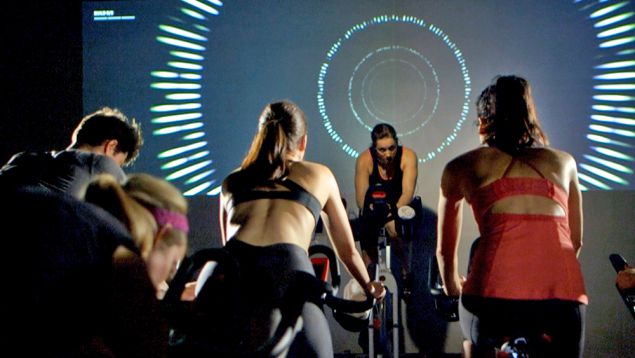
It’s hard to believe that Spinning is 30 years old. Yup, you read that right, Spinning was invented in the mid-1980s by ultra-marathon cyclist Johnny Goldberg (aka Johnny G) as a safe way to train indoors when the weather outside was bad—and, rumor has it, also to be able to stay close to his wife and new baby while training. In 1993, Rolling Stone magazine named Spinning the “hot” exercise of the year. Today, studios like SoulCycle can claim cult status and celebrity aficionados like Michelle Obama and David Beckham. What about Spinning—and its generic equivalent, indoor cycling—has helped it endure for 30 years? And why is it experiencing the revival it’s going through now? Here are 10 reasons it's a great workout, and then some.
1. It’s a huge calorie burner.
Spinning can burn anywhere from 400 to 800 calories per class, which is up there with an hour of running or jogging—only you get to sit down for parts of class! It’s pretty rare to NOT see people coming out of a spin class drenched in sweat, so you know they’ve been working hard.
2. It can help build strength and not just in your legs.
Do it with the correct form, and Spinning can strengthen not only your legs, but also your core, your back, and even your arms if you do some upper-body exercises while on the bike. Many studios these days include small dumbbell workouts in class, but I prefer exercises that use your own body weight to build strength.
3. It’s low impact and easy on your joints.
Low impact does not mean low intensity; it simply means it’s easier on your joints and reduces the risk of injury, versus something like running that is constant pounding on your joints. How many high-intensity workouts do you know of that can do that? Again, form becomes very important here, as does setting up the bike correctly to avoid knee and joint discomfort.
4. Anyone can do it, anytime. (Even when you're exhausted.)
Not only is Spinning low impact and so good for people who have a hard time with high-impact exercises, but it is also great for people of all fitness levels. Although the instructor’s job is to guide you through a challenging workout and provide a certain choreography involving speed and resistance, ultimately each rider is in control of their own pace and resistance. You always have the option of adjusting your ride to fit your needs, and if the instructor is doing a good job, they’ll motivate you to continue to push yourself. Spinning is also a workout that it’s OK to show up tired to. Believe me, I’ve done that many times. In fact, there have been times when I’m so tired at the beginning of a workout that I’ll ride with the lights off and my eyes closed (yes, like a mini-nap). But as long as my legs are moving and the music is playing, I know that eventually I'll naturally start to wake up and increase my exertion. It happens every single time.
5. You’re alone but still in a community.
In a Spinning class, you’re riding your own bike, and chances are, once you get going, you won’t be able to talk to or even really look at anyone else. It is easy to really go inward during your ride, and many people treat it as a pseudo-meditation. Spinning is an individual exercise: What you do on your bike has no bearing on what your neighbor does, at least directly. But each of us is doing this individual ride in a room full of other people. Everyone is there sweating it out, pushing themselves, and riding to the same music with the same instructor. If you walk into the middle of a Spin class, there is an unmistakable energy that is greater than the sum of the individuals—it’s palpable and it’s what I believe builds such a strong sense of community in class. In today’s world of iPhones and earbuds, many of us are seeking out this sense of community, whether it’s through social media or in person and sweaty!
6. It’s a major stress-reliever.
With its dark rooms and loud music, some say taking a Spin class is like going to a club. Some say it’s like a meditation. Either way, there’s something magical about a truly immersive Spin class that helps you leave your worries outside the studio doors and allows you to let go and move. In today’s busy and speedy world, so many of us are seeking out opportunities to let go and relieve stress, and Spinning is definitely a great way to do both. Research shows that working out to fast music makes you work harder; my experience shows that without bright lights, people feel more comfortable jamming out to awesome music, and in this case that means riding your heart out.
7. It requires little skill or coordination.
The music is blaring, your heart is pumping, and you’re moving to the music, as if in a dance. But unlike a dance or Zumba class, you don’t have to be coordinated at all. You don’t have to have any skill, really. It’s a very simple movement, just pedaling in a smooth circle. All you have to do is follow the instructor’s instructions and you’re good to go!
8. You don’t have to think.
Unlike many other workouts, there aren’t any moves or steps to learn. You don’t have to be careful where you’re stepping, and you don’t have to keep track of any balls or ropes. In fact, you could completely zone out and give your brain a break for the duration of the class and you’ll be perfectly fine. Isn’t that a relief?
9. You can go really, really fast.
I love sprints. I love the feeling of letting my legs fly. In a Spin class, you can get up to 30 miles per hour! Compare that to running, where even at an eight-minute mile you're only going 7.5 mph. Where else can you generate that kind of speed without being out on the road?
10. You leave feeling uplifted and euphoric.
Most people leave Spin class on a certain kind of high. I suppose it’s a combination of all of the factors above: giving yourself that hourlong break in the day from your normal routine combined with the dark lighting, motivating music, sweating side by side with friends and strangers, all in a room that is designed to be a powerful environment for it all. What’s not to love?